October is one of North America’s most rewarding months for outdoor travel. New England forests turn scarlet, the Appalachian Mountains layer gold and amber across the horizon, Canadian larches glow beneath early snow, and the Southwest finally cools into prime hiking weather. If you want to combine fall color, forest scenery, coastal drives, mountain trails, and red-rock landscapes in one season, these five destinations deserve a place on your shortlist. Before leaving, always confirm road conditions, reservations, weather alerts, and trail status.
Acadia National Park: Autumn Color Meets the Atlantic
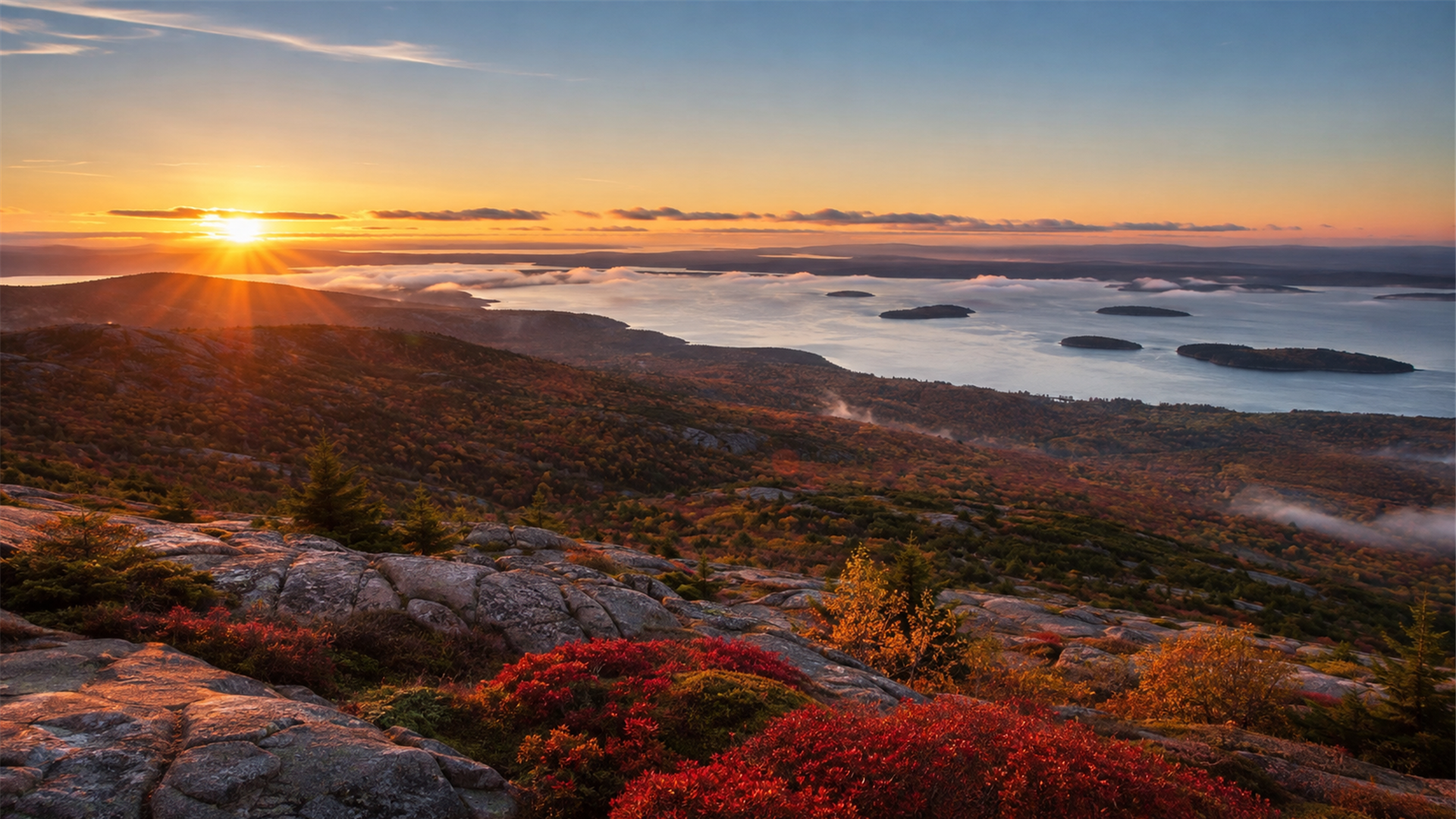
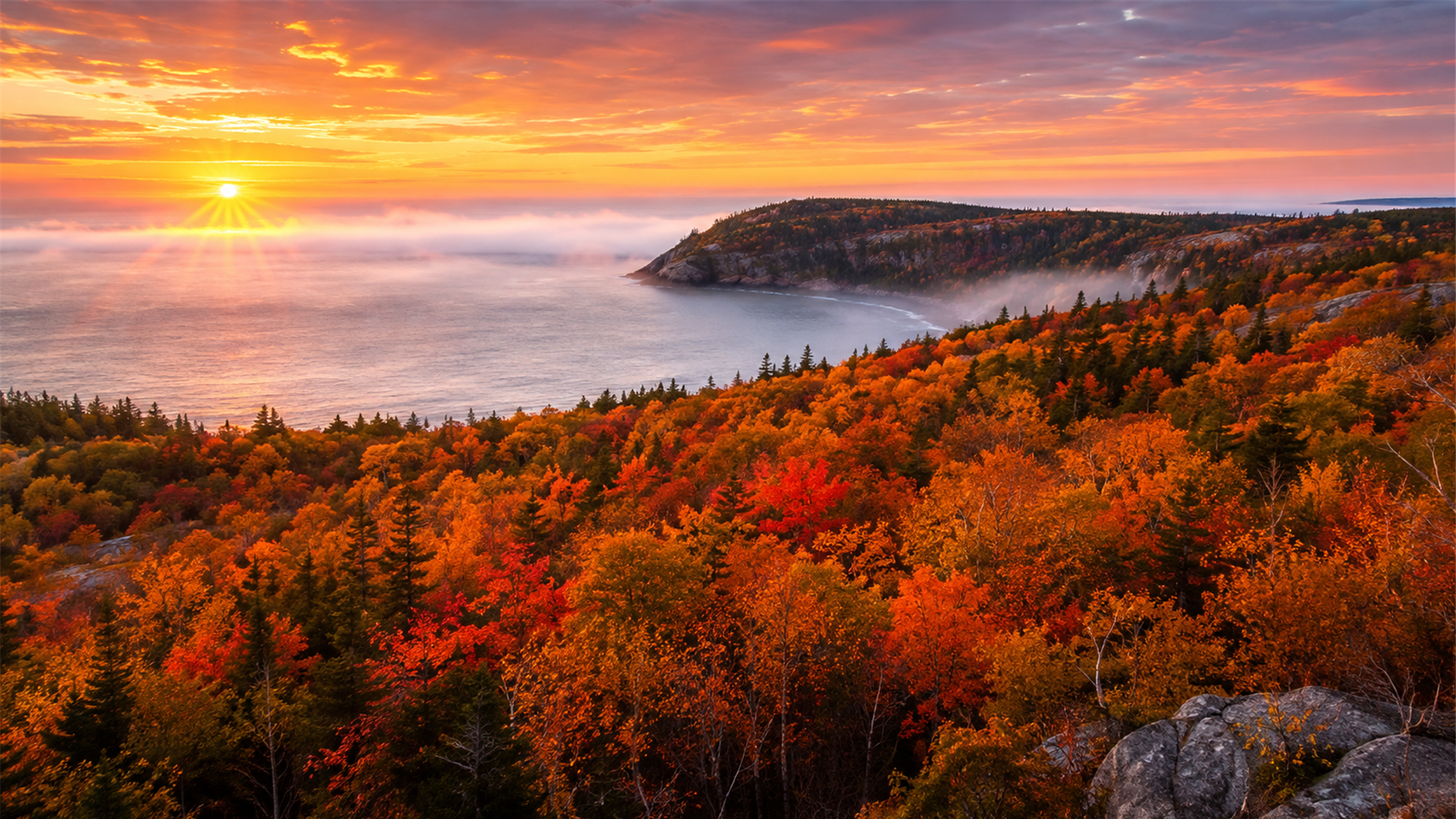
Acadia National Park on the coast of Maine offers a version of fall that feels bigger than foliage alone. In early to mid-October, maples and birches bring rich red, orange, and gold to granite headlands above the Atlantic. The contrast of evergreen forest, rough shoreline, and open water makes the park especially dramatic for photographers and first-time visitors alike.
Start early for Cadillac Mountain, where sunrise can reveal autumn color spreading across Frenchman Bay. Popular periods may require a vehicle reservation, so check ahead. Later, drive the Park Loop Road at an unhurried pace, walk around Jordan Pond, and stop for the area’s famous popovers. Bar Harbor is an easy base for a relaxed evening of fresh Maine seafood after a day outside.
Great Smoky Mountains National Park: Layers of Color and Morning Mist
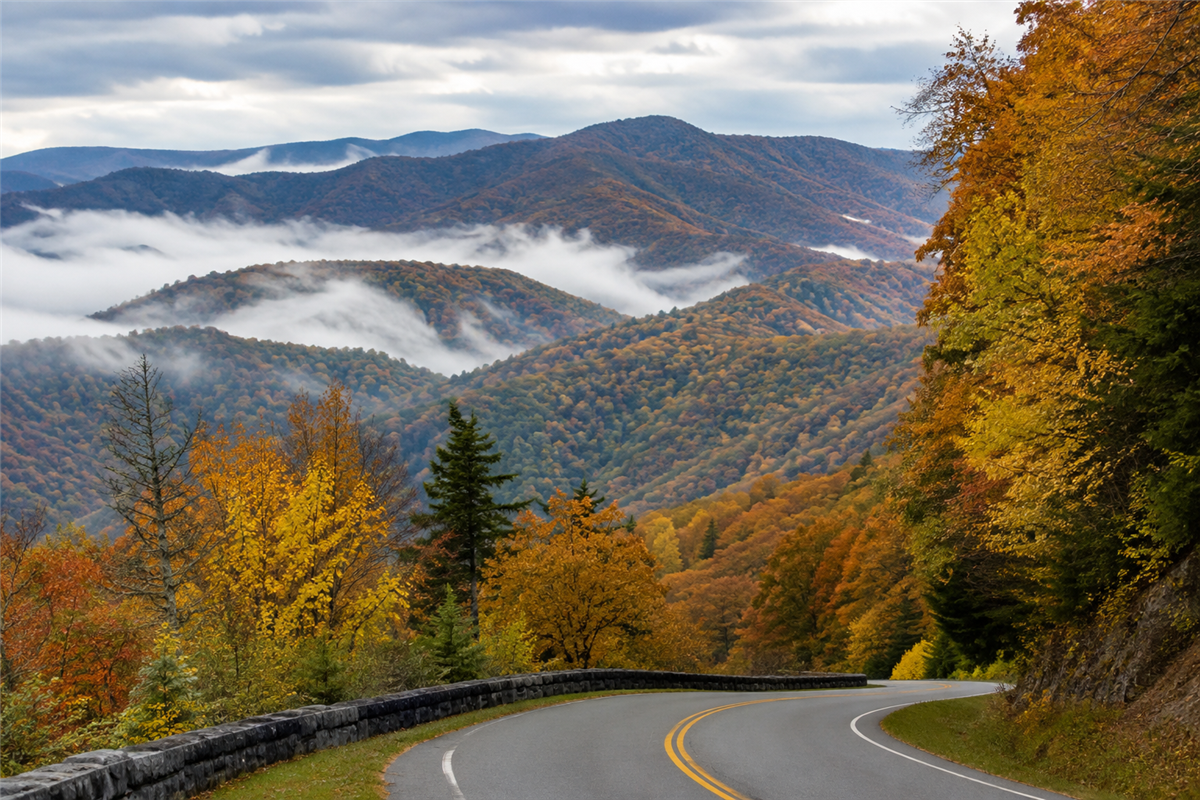
The Great Smoky Mountains are a classic eastern fall destination because elevation and tree diversity stretch the color season across several weeks. By mid to late October, ridges and valleys often show an intricate mix of yellow, copper, red, and deep green. Early morning is the best time to see the low clouds that give the Smokies their name.
For broad views, head toward Clingmans Dome or Newfound Gap. For a slower scenic day, follow the Cades Cove Loop Road and keep a respectful distance from wildlife—deer and black bears are sometimes seen around dawn and dusk. The park pairs naturally with the Blue Ridge Parkway, but resist the temptation to pack too many miles into one day. The roads themselves are part of the experience.
Banff National Park: Golden Larches and Early Snow
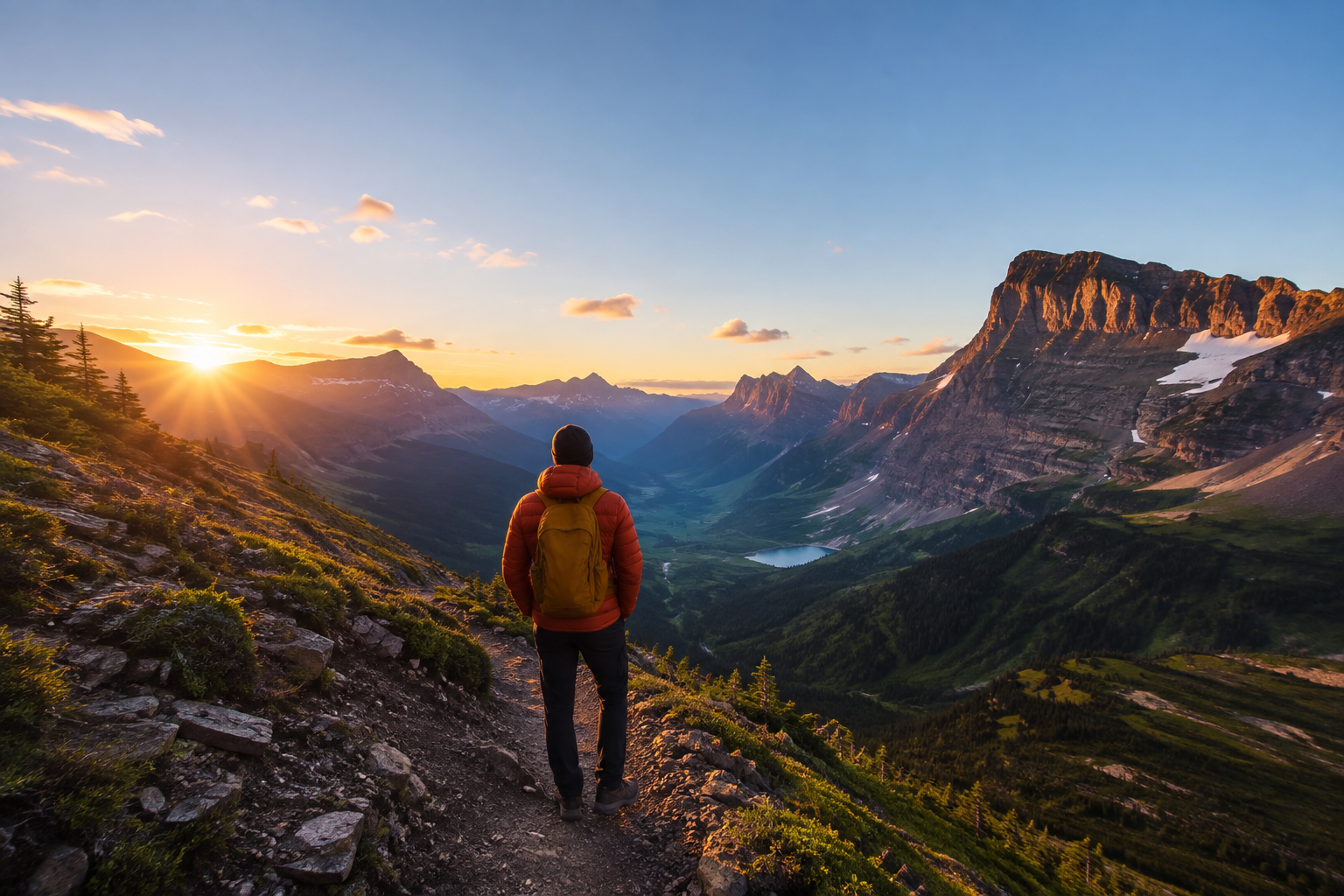
Traveling in early October? Banff offers an entirely different expression of autumn. For a brief window, alpine larches turn brilliant gold while nearby peaks begin to collect snow. With summer crowds thinning, lakes can feel quieter and their deep blue water looks even more striking against the cold mountain air.
Larch Valley is a favorite hike when conditions allow, while Lake Louise and Moraine Lake are beautiful in the stillness of a chilly morning. High-elevation roads and services may close seasonally, so build a flexible plan and pack warm, waterproof layers. End a cold day with a soak at Banff Upper Hot Springs for an easy transition from trail time to relaxation.
Zion National Park: Red-Rock Hiking Without Summer Heat
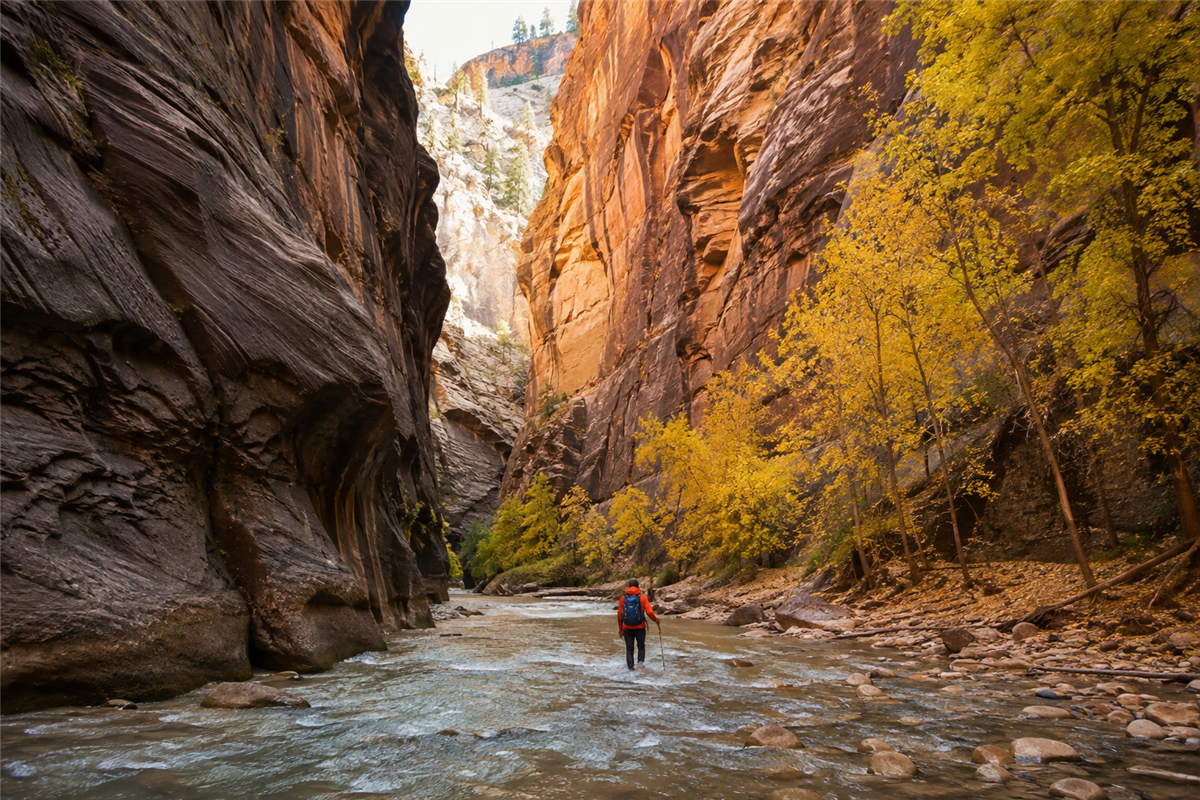
October brings the Southwest back to life for hikers. In Zion, daytime temperatures are usually far more comfortable than in summer, while canyon cottonwoods begin to turn yellow against the sandstone. The Narrows can be an unforgettable river hike, but water level, weather, and flash-flood risk determine whether it is appropriate on any given day. Check conditions immediately before heading out and use proper footwear and insulating layers if needed.
Angels Landing is another iconic option, though permits are required. Even without a major summit hike, short trails and canyon overlooks become especially beautiful at sunrise and late afternoon, when low-angle light brings out the full red, orange, and gold range of the rock.
Sedona: Red Rock, Oak Creek, and a Slower Pace
Sedona works beautifully as a gentler counterpoint to big national-park days. October is warm and dry, avoiding the strongest summer heat while keeping hiking conditions pleasant. Cathedral Rock and Bell Rock offer rewarding half-day outings, while a drive through Oak Creek Canyon adds a ribbon of changing leaves to the region’s famous red sandstone views.
Art galleries, independent restaurants, and spa hotels make Sedona a natural place to rest between more demanding hikes. It is particularly easy to connect with a Grand Canyon or Zion itinerary when you want a day that mixes scenery with a little comfort.
Plan by Landscape, Not by Checklist
- For foliage and coast: Choose Acadia and Bar Harbor, and protect two early mornings for the shoreline and sunrise.
- For a fall road trip: Combine the Smokies with the Blue Ridge Parkway and allow extra time for overlooks and traffic.
- For mountains and hiking: Prioritize Banff in early October and prepare for rapid weather changes.
- For canyon country: Pair Zion with Sedona, leaving recovery time between your bigger walking days.
The best fall trip is not the one that collects the most pins on a map. Leave room for a sunrise, a weather change, and an unplanned roadside view. Bring layers, rain protection, enough water, and respect for wildlife and trail rules. In return, autumn will give you its richest colors at exactly the pace you are willing to travel.