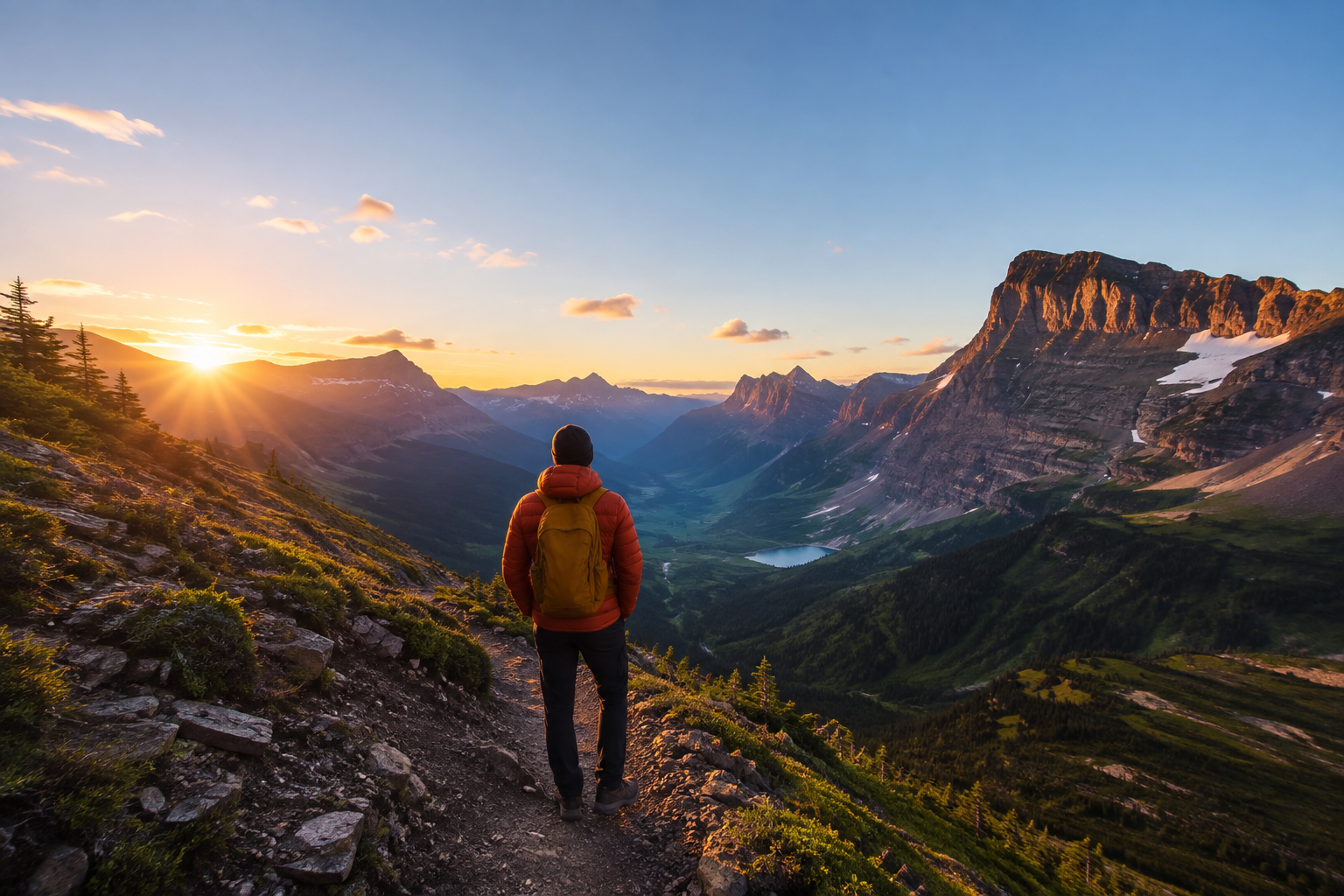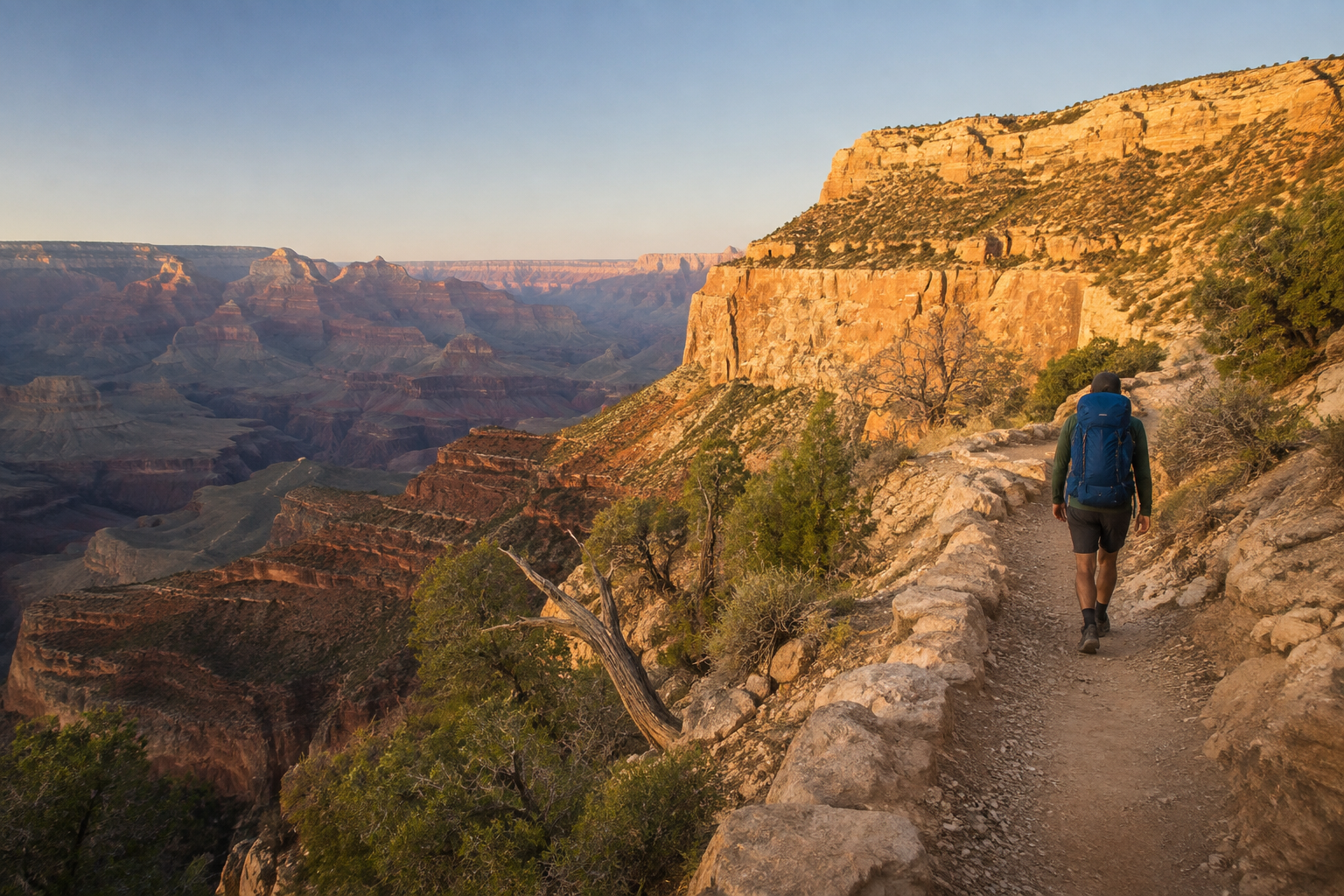
The Grand Canyon is not a place to underestimate. Its trails are beautiful, well-loved, and deceptively demanding: the hike down feels easy until it is time to climb back out. With the right route, a realistic turnaround plan, and careful attention to heat and water, a canyon day hike can become one of the most memorable adventures in the Southwest.
Understand the canyon’s reverse logic
Most hikes begin with a descent and end with the hardest uphill miles. Start earlier than you think you need to, preserve energy for the return, and avoid choosing a distance solely because it looks short on a map. Elevation, temperature, and exposure matter as much as mileage.
Pick a route that fits your day
South Rim visitors often begin on Bright Angel Trail or South Kaibab Trail. Bright Angel offers shade and seasonal water access at selected points, while South Kaibab is more exposed but opens quickly to sweeping views. Check official trail status, water availability, and shuttle schedules before committing. For first-time visitors, a modest out-and-back with a firm turnaround time is often the smartest choice.
Build a heat-smart hiking plan
- Start before sunrise: Cooler trail temperatures make the first miles safer and more enjoyable.
- Carry more water than you expect: Treat water stations as a bonus, not your only plan.
- Eat steadily: Salty snacks and frequent small bites help replace what you lose through sweat.
- Use a turnaround time: Turn around on schedule even if you have not reached the destination you imagined.
Wear breathable layers, a brimmed hat, sun protection, and shoes you have already tested. Trekking poles can reduce strain on steep downhill sections and provide welcome support on the ascent.
Know when to choose a guided hike
A guided Grand Canyon hike can be a great fit for visitors who want local interpretation, pacing support, and a clearer sense of how the terrain works. It is also a useful option for groups with mixed experience levels. A good guide will help set realistic expectations while leaving space to enjoy the geology, plants, and long views that make every switchback feel worthwhile.
Respect the environment and other hikers
Stay on the designated trail, yield thoughtfully on narrow sections, and keep noise low around wildlife. Never leave food or litter behind. Canyon ecosystems are resilient but fragile, and the best visitors leave the trail looking exactly as they found it.
The Grand Canyon asks for humility, preparation, and patience. Plan conservatively, listen to your body, and remember that turning around early is not a failure—it is good trail judgment. You will still leave with a story worth telling.